 The State of Vermont does not raise enough revenue to meet Vermonters’ needs. This lack of sufficient state revenue has resulted in chronic underfunding of state programs and services, including programs that impact young children – investments in early childhood health and welfare, economic security, food security, and more. This underfunding will be exacerbated by federal funding cuts, putting added pressure on the state budget and further reducing the State’s ability to ensure that all people have the basic resources and support that they need to thrive. At the same time, wealth and income inequality have grown, resulting in a population of wealthy Vermonters who are able to pay significantly more in taxes than they currently are – and who are set to receive significant federal tax cuts due to recent Congressional action. The state must raise revenue from those who can afford to pay.
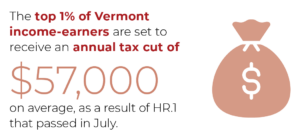
The Alliance supports the Fair Share for Vermont Campaign in advocating for a tax increase on all people in Vermont earning more than $500,000 per year. This tax increase would claw back a portion of the $57,000 average annual federal tax cut that the wealthiest Vermonters are set to receive under the One Big Beautiful Bill Act, and will generate over $100 million annually for the state to improve public goods and services and increase resilience to federal funding cuts.
Lead Organization: Fund Vermont’s Future Campaign
Data and Talking Points
- Due to recent Congressional action, the top 1% of Vermont taxpayers are set to receive an average annual federal tax cut of $57,000 per filer, beginning in 2026
- The Fair Share of Vermont Campaign’s revenue proposals would raise over $400 million in annual state revenue through recovering federal tax cuts for the top 5% of Vermont income-earners and closing federal tax loopholes that benefit the wealthy.
- The state must raise sufficient revenue to meet the needs of all Vermonters, providing security and opportunity for Vermont residents at every stage of life.
- An increase in state revenue will provide the state with better resources to meet the needs of Vermont’s young children and families.
Result: No legislation passed
Pre-session goal: Creation of a new tax bracket on annual personal income over $500,000, generating over $100 million annually in state revenue to improve public goods and services and increase resilience to federal funding cuts.
The primary initiative to change state tax policy was led by House members who proposed to recapture a portion of the federal tax cuts given to the wealthiest Vermonters in H.R. 1 through passage of a new tax bracket on the top 1% of income-earners and a surcharge on unearned (non-wage) income for high-income Vermonters. These policies would have generated approximately $150 million annually in state revenue to improve public goods and services and increase resilience to federal funding cuts. The House Ways and Means Committee engaged in substantial discussions of this proposal over several weeks as they considered a number of different tax bills.
While the legislation ultimately was not passed by the Committee, the policy garnered substantial legislative attention from both chambers and has significant momentum moving into the 2026 election cycle and 2027 legislative session, especially as the impacts of federal funding cuts from H.R. 1 intensify.